


Mobile fleet washing is commercial vehicle cleaning done at your own depot, yard or worksite. A team arrives with hot-water pressure washers, water, cleaning products and wastewater recovery equipment, washes your vehicles where they park, and leaves the area ready for normal use. Your vehicles don't have to go to an off-site wash.
Want to know if it suits your site? Jump to how to book a first visit at the end of this guide. We reply within 2 business hours.
If you've never had a wash team on your yard, the practical questions come before the price. Where do the vehicles stand? Whose water is it? Where does the dirty water go? This guide answers them with three real jobs: a retail depot with no water supply, a council depot with a workshop to work around, and a dockside where wash water had nowhere to go.
The word that matters is mobile. The wash comes to the vehicles instead of the vehicles going to the wash. The cleaning itself, hot water, pre-treatment and hand finishing, is the same commercial work you'd get anywhere. What changes is the logistics: no driver leaves site, nobody queues, and the site doesn't need its own wash bay.
Fleet washing means cleaning a group of commercial vehicles run by one business: HGVs and trailers, vans, refuse vehicles, sweepers and tippers, and plant such as excavators and dump trucks. It works for a handful of vans as well as hundreds of vehicles across several sites, and our quote form starts at 1 to 5 vehicles. Mobile fleet washing does that cleaning on your premises. You'll also see it called mobile fleet cleaning or a mobile fleet wash, and for HGVs a mobile truck wash or lorry wash. They describe the same service.
A trained, insured team does the work, follows risk assessments and method statements, and deals with the wash water.
It's also more than a rinse. Depending on the vehicle, a visit can include traffic film removal, chassis and wheel-arch cleaning, hopper dig-outs, trailer interior sanitisation, an underside clean before servicing (our MOT and service preparation wash guide explains it), engine bay cleaning where it's appropriate, or steam cleaning on plant.
There are three ways to keep a fleet clean. You can drive the vehicles to a wash, build and run a wash bay on your own site, or bring a mobile team in. Here's how they compare on the day.
A permanent wash bay can be costly to build and run, and on some sites it isn't practical at all. Our complete guide to fleet washing covers the rest of the picture: contaminants, schedules and what to look for in a supplier.
A visit has seven stages. The table shows what the team does and what you do at each one.
The stages stay the same from site to site. What changes is the set-up, and three real jobs show how far it can change.
Poundland had a distribution depot with no wash facility, no mains water and no suitable drainage, and more than 50 articulated HGVs to clean every weekend. The team brings its own water, power and hot-water equipment, washes the exteriors, sanitises the inside of each trailer every week and takes the wash water away. The depot needed to supply none of it, and all the work is done over the weekend, outside normal depot operations.
Barnsley Council's depot also houses its workshop, so the schedule had to follow the workshop and the collection service. The refuse fleet gets a weekly top wash, with pre-MOT and service washes timed to servicing and MOT dates, plus hopper dig-outs and bin lift cleaning. The team works on site, so the vehicles don't leave the depot.
For Spire Healthcare's mobile CT scanners the sites are hospitals, many without suitable washing facilities. The team cleans outside normal hospital hours and plans visits around each scanner's next move, using its own water and capturing the wash water.
As often as the work needs. Visits can be daily, weekly, fortnightly or monthly, timed to MOTs and services, or booked as a one-off deep clean, and the quote form lets you choose one-off, weekly, monthly or a contract. The jobs above show the range: Poundland's trailers are sanitised every weekend, Barnsley's refuse fleet gets a weekly top wash, and Spire's scanners are cleaned around each move. Our guide to how often commercial vehicles should be washed helps you pick a starting schedule.
The team brings almost everything. Your site's part is mostly access, space and information.
The short right-hand column is the point. If your depot has no wash bay, no hose reels and no drain it could use, the wash can still go ahead.
The wash can still go ahead, and the wash water is the reason the set-up changes. Peel Ports had more than 30 port tugs to clean, with no wash area, no suitable drainage and no mains water. Ordinary pressure washing was ruled out because contaminated wash water posed an environmental risk.
The team used a self-contained set-up instead:
Mechanics could then inspect and service the tugs directly, because the clean had exposed oil leaks, damaged hoses and worn parts that grime had hidden.
The reason for the care is in the rules. GOV.UK's pollution prevention guidance for businesses lists vehicle washing among the activities that produce contaminated water. It says surface water drains discharge directly to the environment, and that contaminated water should go to the foul drain with your water company's permission, or be collected in a sealed system for reuse, treatment on site or removal by a registered waste carrier. A wash mat with recovery equipment is the sealed system. We hold waste carrier licences for England and Scotland, and our environmental and compliance cleaning service covers the wash water side of a job.
Before any work starts, the team checks nearby drains, your site drainage and how recovered water will be contained and removed. Our guides to washing vehicles where there's no wash bay and recovering wash water during a mobile wash go into more detail.
Our quote form lists six site types: waste facility, council depot, construction site, quarry, industrial site and transport hub. In practice the work has been wider than that:
Mobile washing doesn't suit every site, and coverage is subject to availability and site requirements. A yard with no room to work, vehicles that can't be reached, or no safe way to contain the wash water can limit what's possible until something changes. That's what the site survey is for. It's better to find out before a team turns up.
A clean vehicle isn't automatically a roadworthy one. A wash makes inspections easier and shows up leaks, damaged hoses and corrosion, but it doesn't replace roadworthiness checks.
Start with the quote form. It takes a few minutes, it's open 24/7, and we reply within 2 business hours. It asks five things in turn:
Not sure whether your site will work? Choose the site survey option. It lets you find out about space, access and drainage before anything is booked. Prefer to talk? Call 0800 6124 780 or email sales@247mobilefleetwash.co.uk. We cover twelve regions across the UK, from Scotland and Northern Ireland to London and the South West.
Request a mobile fleet wash quote
247 Mobile Fleet Wash is based in Halifax, West Yorkshire. We've worked for waste operators, councils, construction contractors and industrial organisations for over 20 years, and our homepage lists 140+ commercial fleets supported, 45+ long-term contracts and 380+ projects delivered. We're SafeContractor, SEPA, Avetta SSIP, IPAF and Subcontractor approved, and we hold waste carrier licences for England and Scotland (licences and accreditations).
Commercial vehicle cleaning carried out where your fleet is based. The wash team brings its equipment, water and wash-water recovery to your depot, yard or worksite, so no vehicle has to go to an off-site wash.
Largely, yes. A mobile truck wash or mobile lorry wash usually means HGVs and trailers. Mobile fleet washing covers the whole fleet, including vans, refuse vehicles, sweepers, tippers and plant, and can add work such as hopper dig-outs, trailer interior sanitisation and steam cleaning.
Our guide prices start at £12.50 a wash for a tractor unit and run to £40 for a tractor unit and trailer, with a minimum charge of £160 + VAT per visit. What you pay depends on the vehicles, how many are washed per visit, how dirty they are, what the wash includes and your site.
Our quote form starts at 1 to 5 vehicles, so a small fleet can book. Each visit has a minimum charge, so washing more vehicles on one visit brings down the cost of each.
No. The team brings its own water, hot-water pressure washers, power where needed, and portable wash mats with wastewater recovery equipment. Whether a particular site works depends on access, space and drainage, which the site survey checks.
Where a site has no suitable drainage, it's captured on wash mats and removed for disposal, so it doesn't reach surface water drains. GOV.UK guidance says contaminated water should go to the foul drain with your water company's permission, or be collected in a sealed system for reuse, treatment or removal by a registered waste carrier.
It's planned around your shifts, collection rounds or workshop schedule, including nights and weekends. For a retail distribution depot the work is finished over the weekend, and for hospital CT scanners it's done outside normal hospital hours.
On whatever schedule suits the fleet: daily, weekly, fortnightly or monthly, around MOT and service dates, or as a one-off deep clean. A regular schedule also brings the cost per vehicle down.
HGV tractor units and trailers, rigid trucks, vans, refuse and recycling vehicles, sweepers, gully suckers, tippers, tankers, buses and coaches, and plant such as excavators, telehandlers and dump trucks. The method depends on the vehicle, how dirty it is and the site.
Risk assessments and method statements (RAMS) and site-specific documentation. When you compare suppliers, also ask for COSHH information, proof of insurance and staff training records. Our guide to choosing a mobile fleet washing company has the full checklist.
Yes, subject to availability and site requirements. Our regions are London, the East Midlands, Wales, Yorkshire, the South West, the South East, the North East, the North West, Northern Ireland, the East of England, Scotland and the West Midlands.

What the HGV MOT test checks underneath, why dirty or unladen lorries get turned away, 2026 test fees, and a pre-MOT checklist for transport managers.
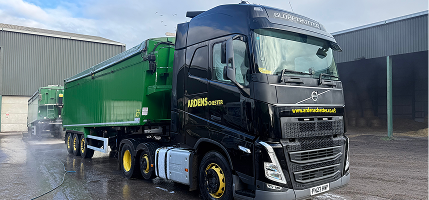
Compare 7 fleet management tools for waste and municipal fleets in 2026, and see where waste & municipal fleet cleaning fits into your maintenance plan.
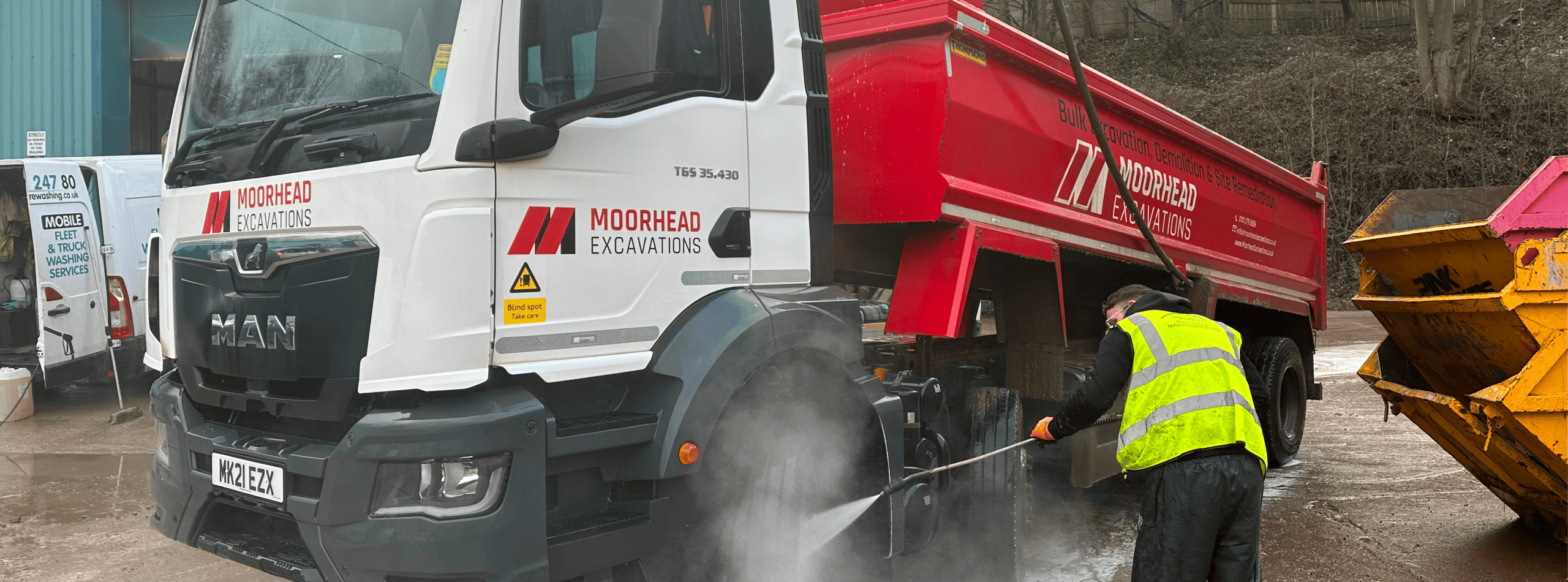
Discover how fleet washing works, how often commercial vehicles need cleaning, the benefits of mobile fleet washing and how to manage wastewater responsibly.






Select the service you're interested in and we'll guide you
through a tailored quote process.
Available 24/7
WHAT DO YOU NEED
CLEANED?
Tell us about
your assets
Where are
you located?
Contact
details
Review &
submit

Your quote request has been received.
Our team will review your requirements and get back to you within: