
For businesses transporting food, pharmaceuticals, retail goods or other sensitive products, keeping the inside of a trailer clean is just as important as maintaining its exterior.
Over time, trailers can accumulate dirt, dust, packaging debris, spillages and unpleasant odours. Without regular cleaning, this contamination can affect hygiene standards, create an unprofessional impression and increase the time needed to prepare trailers for their next load.
A planned trailer sanitisation programme helps ensure trailers remain clean, fresh and ready for service.
Trailer sanitisation goes beyond a simple sweep out.
It is a thorough cleaning process designed to remove dirt, debris and surface contamination from the trailer interior before applying an appropriate sanitising solution to high-contact and load-bearing surfaces.
The aim is to leave the trailer clean, hygienic and ready for its next use.
Commercial trailers are used every day to transport a wide range of products.
Even when loads are palletised, contamination can build up from:
Without regular cleaning, these contaminants can accumulate over time, making trailers more difficult to maintain and less pleasant for staff loading and unloading vehicles.
Businesses operating in the food and pharmaceutical sectors often have strict hygiene procedures.
Regular trailer sanitisation helps support these procedures by ensuring trailers are cleaned between loads or as part of a planned maintenance schedule.
Maintaining a clean loading environment helps demonstrate good housekeeping and supports overall operational standards.
Odours can quickly develop inside trailers, particularly where moisture or spillages have been left untreated.
Regular cleaning and sanitisation help remove the source of unwanted smells rather than simply masking them.
This leaves trailers fresher for drivers, warehouse staff and customers receiving deliveries.
The condition of a trailer says a lot about the business operating it.
A clean, well-maintained trailer creates a positive impression when arriving at customer premises, distribution centres or loading bays.
Professional presentation reflects attention to detail and demonstrates pride in maintaining your fleet.
While the exact process varies depending on the type of trailer and its previous load, a professional sanitisation service typically includes:
Each trailer can be cleaned according to its operational requirements.
Trailer sanitisation is suitable for a wide variety of commercial trailers, including:
Cleaning schedules can be tailored to match the demands of each operation.
Many operators choose to combine trailer sanitisation with regular exterior fleet washing.
Typical programmes may include:
Having a structured programme helps maintain consistent standards throughout the fleet.
Trailer sanitisation is an important part of maintaining a professional commercial fleet. Regular cleaning helps remove dirt, debris and surface contamination, improves presentation and supports the hygiene standards expected across many industries.
Whether transporting food, pharmaceuticals, retail goods or general freight, keeping trailers clean helps protect your operation, create a better working environment and ensure vehicles are always ready for their next journey.
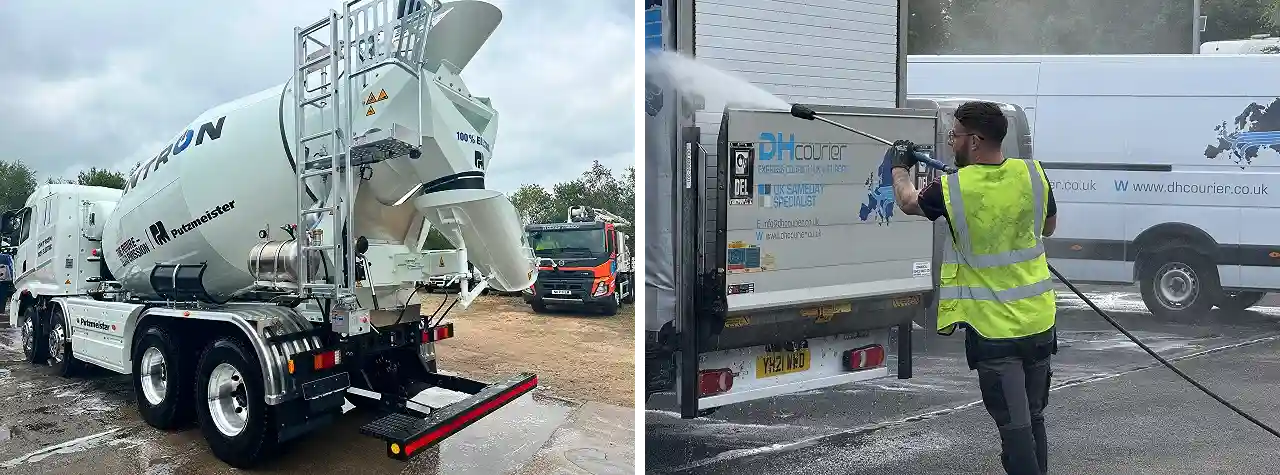
When people think of vehicle washing, they often picture a quick exterior clean to improve appearance. However, an MOT & Service Preparation Wash is a specialist cleaning process designed to prepare commercial vehicles for servicing, maintenance and MOT inspections.
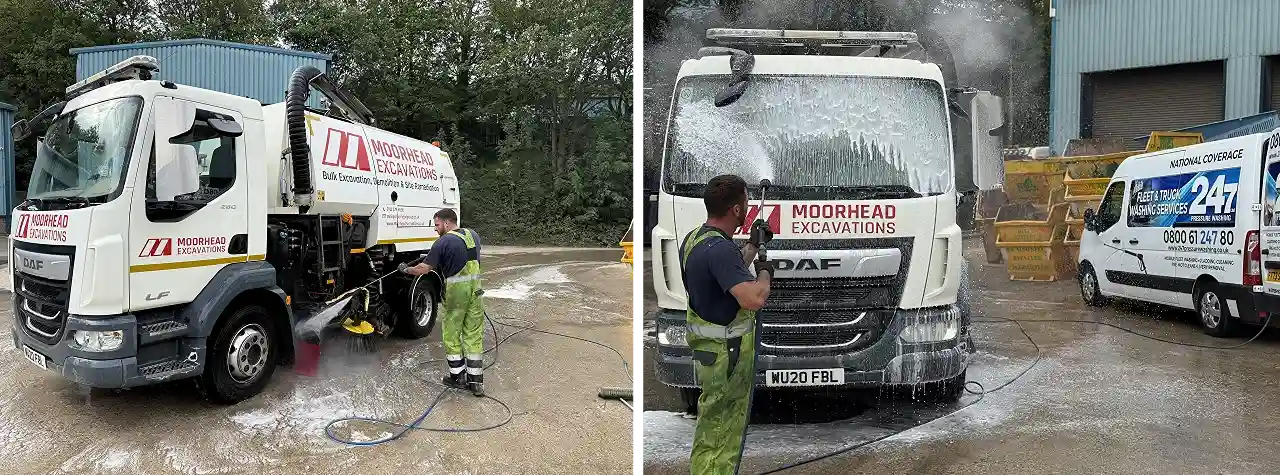
When commercial vehicles are washed, it's not just dirt that's removed. Wash water often contains oil, grease, fuel residues, brake dust, detergents and other contaminants that can pose a risk to the environment if they are allowed to enter surface water drains.
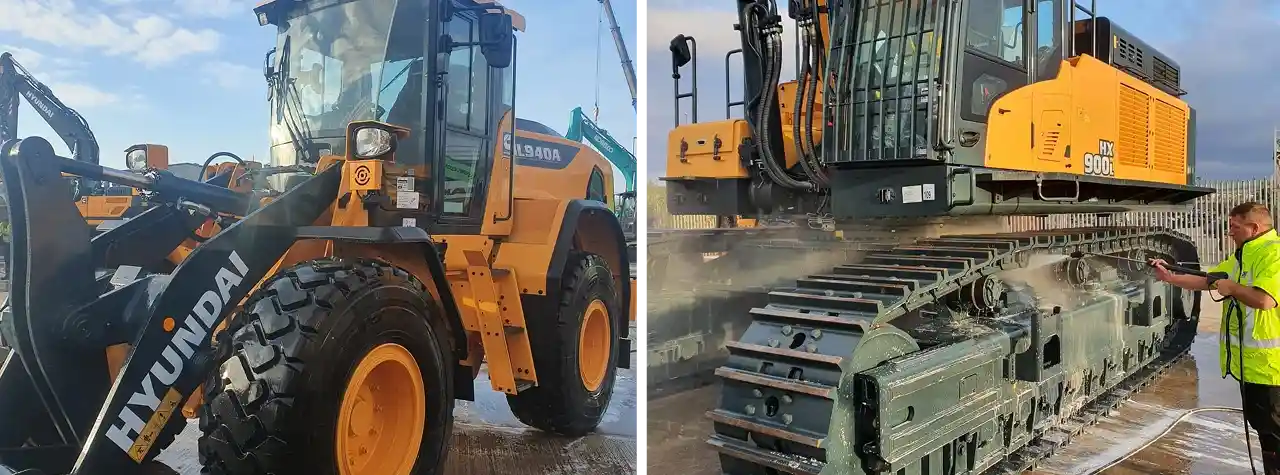
For many businesses, keeping a fleet clean is essential, but not every depot has a dedicated vehicle wash facility. Limited space, no water supply, unsuitable drainage or operational demands can make traditional vehicle washing difficult.



.webp)


Select the service you're interested in and we'll guide you
through a tailored quote process.
Available 24/7
WHAT DO YOU NEED
CLEANED?
Tell us about
your assets
Where are
you located?
Contact
details
Review &
submit

Your quote request has been received.
Our team will review your requirements and get back to you within: