

%20(1).png)
A dirty commercial vehicle is not unusual. Put an HGV on the road every day, send a refuse truck out in wet weather, or run a tipper across a muddy construction site and it will not stay clean for long.
The problem is that fleet vehicles do not just pick up ordinary road dirt. Depending on where they work, they can come into contact with mud, clay, oil, grease, waste residue, aggregate dust, road salt and other stubborn contaminants.
For fleet operators, keeping vehicles clean is therefore less about making them look good for the sake of it. It is about having a sensible cleaning routine that fits around the way the fleet actually works.
That is where fleet washing comes in.
Instead of taking vehicles away from the depot every time they need cleaning, many businesses now use mobile fleet washing services that come to their site. Vehicles can be cleaned at a depot, yard, construction site, quarry or other suitable location, subject to the site's facilities and environmental requirements.
This guide looks at what fleet washing involves, how often different types of vehicles may need cleaning, the advantages of on-site cleaning, wastewater considerations and what to look for when choosing a professional fleet cleaning company.
Fleet washing is the professional cleaning of multiple commercial vehicles or pieces of equipment operated by the same business or organisation.
Unlike a standard car wash, commercial fleet cleaning needs to account for larger vehicles, heavier contamination, specialist equipment, operational schedules and the environment in which vehicles are used.
A fleet washing service may include HGVs, trucks, trailers, vans, refuse collection vehicles, recycling vehicles, road sweepers, tippers, excavators, dump trucks and other commercial or industrial equipment.
The exact cleaning process depends on the vehicle and its working conditions.
The terms fleet washing and fleet cleaning are often used interchangeably, but fleet cleaning can describe a wider range of work.
Fleet washing generally focuses on removing dirt and contamination from vehicle surfaces, while professional fleet cleaning can also include specialist services such as:
Mobile fleet washing means the cleaning team travels to the fleet rather than requiring vehicles to be transported to a fixed wash facility.
Cleaning can be carried out at suitable:
This approach can be particularly useful for businesses that need to keep vehicles available for operational work.
Depending on the fleet and the cleaning requirements, professional fleet washing may include:
The objective is not simply to make a vehicle look clean. A suitable cleaning programme should address the types of contamination that vehicles encounter during normal operations.
Commercial vehicles spend much of their working life exposed to road and site contamination. Without a planned cleaning routine, dirt and other materials can accumulate in areas that are difficult to inspect or clean.
Regular fleet cleaning can therefore form part of a wider vehicle maintenance and operational programme.
Commercial vehicles can encounter a mixture of:
Cleaning helps remove these contaminants from vehicle surfaces and components before they continue to accumulate.
For vehicles working on construction sites, quarries or waste operations, contamination can be substantially heavier than that experienced by vehicles operating mainly on normal roads.
Regular cleaning does not automatically guarantee a longer vehicle life, but it can help operators manage contamination and make it easier to identify areas requiring attention.
A clean vehicle can make certain inspections and maintenance tasks easier because accumulated dirt and contamination are less likely to obscure components.
For example, cleaning may be useful before:
UK operators have responsibilities around vehicle roadworthiness, maintenance and safety inspections. Cleaning is not a replacement for those checks, but it can support the wider maintenance process.
For customer-facing businesses, vehicles are often highly visible representations of the company.
A clean, well-presented commercial vehicle can help support:
This can be particularly important for haulage, logistics, delivery and service businesses whose vehicles regularly operate on public roads.
Some industries naturally expose vehicles to more difficult cleaning conditions.
This includes:
In these environments, professional fleet cleaning can be more appropriate than relying on basic washing equipment.
There is no single cleaning frequency that works for every fleet.
A suitable fleet washing schedule depends on the vehicles, operating environment and type of contamination they encounter.
Factors to consider include:
A haulage fleet operating mainly on motorways may have different requirements from a quarry fleet working in mud and aggregate dust every day.
Typical cleaning consideration
HGVs
Regular scheduled washing based on usage and presentation requirements
Haulage fleets
Mileage, road conditions and customer requirements
Waste vehicles
More frequent cleaning may be appropriate because of contamination
Municipal fleets
Usage, operational requirements and vehicle type
Plant machinery
Mud, clay, dust, grease and site conditions
Quarry vehicles
Dust, aggregate residue, mud and material build-up
Tippers
Material carried and site conditions
Plant hire equipment
Cleaning before and after hire and during scheduled maintenance
The most effective approach is usually to create a cleaning programme around actual operating conditions rather than choosing a frequency simply because it is common elsewhere.
With mobile fleet washing, the cleaning team comes to the location where the vehicles or equipment are based.
This can include depots, yards, construction sites, quarry sites, waste facilities and plant hire locations.
For fleet operators, the main advantage is convenience. Vehicles do not necessarily have to be driven to an external facility simply to be cleaned.
247 Mobile Fleet Wash provides mobile cleaning for commercial and industrial operations, with cleaning programmes designed around fleet movements and operating schedules.
An on-site fleet washing programme can offer several practical advantages:
Less vehicle movement
Vehicles can be cleaned where they are already parked or operating, reducing unnecessary journeys to a separate wash facility.
Reduced operational disruption
Cleaning can be planned around vehicle availability and operating hours.
Flexible scheduling
Cleaning may be arranged around shifts, depot activity and fleet movements.
Suitable for multiple vehicles
A scheduled visit can cover several vehicles rather than requiring individual vehicles to be taken to a wash facility.
Useful for multi-site fleets
Businesses operating across different depots or locations can consider cleaning programmes tailored to each site.
Mobile cleaning can be particularly useful for:
The exact suitability depends on site access, drainage, vehicle requirements and the cleaning work involved.
Different industries create different cleaning challenges. A refuse collection vehicle can have very different contamination from a quarry tipper or construction excavator.
That is why specialist fleet cleaning should be based on the type of vehicles and environment involved.
Waste & Municipal Fleet cleaning services are designed for vehicles and equipment used in waste collection, recycling, street cleaning and municipal operations.
These fleets can include:
Waste vehicles can encounter a combination of waste residue, organic material, road grime, mud, grease and other contamination.
Specialist cleaning can therefore be used to manage contamination across vehicle bodies, chassis, wheels, underbody areas and other suitable surfaces.
247 Mobile Fleet Wash specifically provides cleaning for RCVs, recycling vehicles, sweepers, gully suckers, jetting vehicles and council fleets.
Plant & Heavy Machinery Fleet cleaning services are relevant to construction companies, plant hire businesses, infrastructure contractors and industrial operators.
Heavy machinery may include:
Construction and plant equipment can accumulate:
Cleaning requirements vary according to the machine, working environment and level of contamination.
247's plant cleaning service covers equipment such as excavators, dumpers, loaders, telehandlers and loading shovels, with cleaning available at construction sites, plant yards, depots and industrial locations.
Quarry & Aggregate Fleet cleaning services are designed around vehicles and equipment operating in demanding quarry and aggregate environments.
These can include:
Quarry vehicles can accumulate substantial amounts of:
Tippers and dump trucks may repeatedly travel between working areas and public roads, allowing contamination to build up across wheels, chassis, vehicle bodies and other areas.
247 provides on-site cleaning for quarry operators, aggregate producers, asphalt plants and aggregate haulage contractors.
The type of contamination determines the cleaning approach required.
Commercial vehicles travelling on UK roads collect road grime and traffic film. This can become particularly noticeable around lower body panels, wheels and chassis areas.
Construction, agricultural, quarry and industrial sites can expose vehicles to heavy mud and clay. Removing accumulated mud can help keep vehicles cleaner and make inspections easier.
Plant machinery and commercial vehicles can accumulate oil and grease during normal operations. Where appropriate, specialist cleaning and degreasing methods can be used to address heavy contamination.
Quarry and aggregate vehicles can collect fine dust, stone residue and material deposits during loading, transport and site operations.
Waste and municipal vehicles can encounter organic material, food residue and other waste contamination, creating a different cleaning requirement from a standard transport fleet.
During colder months, road salt and winter grime can accumulate on vehicles. Regular cleaning can help operators manage seasonal contamination as part of their normal fleet maintenance routine.
Specialist Fleet Cleaning Services
Not every vehicle requires the same type of cleaning. Some operations need specialist cleaning services in addition to routine exterior washing.
Refuse collection vehicle cleaning can require specialist cleaning because of the type of material they handle.
Mud, dirt and road contamination can accumulate underneath commercial vehicles. Under-chassis cleaning can be included where required.
Engine bay cleaning can help remove accumulated grime and contamination, but it should be carried out using methods appropriate to the vehicle and with suitable environmental controls.
Heavy plant can require more intensive cleaning because of the mud, clay, dust, grease and industrial debris encountered on working sites.
Where oil and grease have accumulated, suitable degreasing methods can be used as part of specialist cleaning.
Heavy mud removal is particularly relevant to construction, quarry and industrial operations.
Some waste, municipal and industrial operations may require targeted decontamination as part of their cleaning programme.
A pre-MOT or workshop preparation wash can help remove heavy contamination before a vehicle enters a workshop or inspection environment.
247 currently lists services including engine bay cleaning, fleet decontamination, mud removal and pre-MOT/workshop cleaning.
Wastewater is an important consideration when washing commercial vehicles.
Vehicle washing can produce water containing contaminants such as:
The Environment Agency and GOV.UK guidance states that businesses must prevent contaminated water from causing pollution. Vehicle washing is specifically identified as an activity that can produce contaminated water.
This does not mean that vehicle washing itself is prohibited. Instead, the wash water needs to be managed appropriately.
Depending on the site and circumstances, options can include collecting contaminated water for reuse or treatment, arranging appropriate removal, or discharging to the foul or combined drainage system where the required permission exists.
A professional mobile fleet cleaning operation should consider what happens to wash water after cleaning rather than focusing only on the vehicle itself.
Wastewater recovery can help control contaminated wash water and reduce the risk of uncontrolled run-off.
Surface water drainage can discharge directly into the environment. GOV.UK guidance therefore advises businesses to prevent contaminated water from entering surface water drains.
This is especially important at industrial sites, yards, construction locations, waste facilities and other areas where oil, grease, mud or industrial contaminants may be present.
Containment may be appropriate where contaminated wash water cannot safely be discharged through an authorised drainage route.
The correct approach depends on the site, drainage arrangements, type of contamination and applicable requirements.
Environmental management should be considered before cleaning begins.
This can include:
247 Mobile Fleet Wash also provides environmental services including wastewater recovery, drain protection and fleet decontamination.
A professional fleet cleaning programme should begin with an understanding of the vehicles, site and operating requirements.
The cleaning provider reviews the location, access, operating environment and relevant site conditions.
The fleet is assessed according to vehicle types, sizes and typical contamination.
A cleaning plan is developed around the required services, frequency and operational schedule.
Where required, suitable pre-treatment can be used to loosen dirt, mud, grease or other contamination.
Appropriate cleaning equipment and methods are used to clean suitable vehicle surfaces.
Additional services such as degreasing, underbody cleaning, engine bay cleaning or heavy mud removal can be considered where appropriate.
Wash water should be managed according to site requirements and applicable environmental controls.
The vehicle or equipment is checked after cleaning to identify areas that may need additional attention.
For fleets requiring ongoing cleaning, visits can be arranged on a regular schedule.
Choosing a fleet cleaning provider involves more than comparing the price of a single wash.
Consider the following factors.
Look for a provider that understands commercial vehicles and the practical challenges of fleet operations.
A company cleaning HGVs may not necessarily have the same experience with RCVs, quarry equipment or heavy plant.
Ask whether the provider has experience with your specific type of fleet.
If moving vehicles to an external wash facility creates disruption, an on-site service may be more suitable.
Cleaning should fit around vehicle movements and operating hours rather than unnecessarily interfering with operations.
Ask how wastewater is handled, particularly if your site has limited drainage or environmental constraints.
The provider should have suitable procedures for working around vehicles, machinery, employees and industrial environments.
Different sites present different hazards. Site requirements should be considered before cleaning begins.
A mixed fleet may include HGVs, trailers, vans, RCVs, tippers and plant equipment. A provider capable of handling different vehicle types can simplify fleet management.
If cleaning is an ongoing requirement, ask whether the provider can create a recurring programme rather than treating every wash as a separate job.
For businesses operating multiple depots or locations, nationwide or multi-site capability may be an important consideration.
How to Build a Fleet Washing Schedule
A structured cleaning schedule can make fleet washing easier to manage.
List every type of vehicle and equipment requiring cleaning.
For example:
Record the main contaminants each vehicle encounters.
These might include mud, oil, grease, waste residue, dust, aggregate material or road salt.
Use operating conditions to determine whether vehicles require weekly, fortnightly, monthly or less frequent cleaning.
Determine whether vehicles require:
Look at vehicle availability, shift patterns and depot operations.
Determine how wash water will be contained, treated, recovered or discharged through an authorised route.
Check whether the selected frequency and cleaning methods are achieving the required result.
Fleet requirements can change. Review the programme when vehicle numbers, routes, operating conditions or contamination levels change.
Fleet size
How many vehicles need cleaning?
Vehicle type
HGV, RCV, plant or quarry equipment?
Contamination
Mud, oil, waste or dust?
Frequency
Weekly, fortnightly or monthly?
Location
Depot, yard, quarry or construction site?
Operating hours
When can vehicles be cleaned?
Wastewater
How will wash water be managed?
Specialist cleaning
Is degreasing, decontamination or underbody cleaning required?
Some businesses choose to handle vehicle cleaning internally, while others use a professional fleet washing company.
Neither approach is automatically right for every operation. The decision depends on fleet size, equipment, staff availability, facilities and environmental requirements.
DIY / In-house
Professional Fleet Washing
Requires suitable equipment
Cleaning equipment supplied by provider
Requires staff time
Cleaning team handles the work
Requires suitable wash facilities
Can often be performed on-site
Internal wastewater management
Provider can support wastewater management
Internal scheduling
Cleaning programme can be scheduled
Equipment requires maintenance
Provider manages its own cleaning equipment
Suitable for businesses with appropriate facilities
Useful for fleets requiring specialist or mobile cleaning
For a small fleet with suitable facilities and trained staff, in-house cleaning may be practical.
For larger fleets, specialist equipment, heavy contamination or multiple locations, outsourcing may provide a more convenient operational model.
There is no single fleet washing price that applies to every UK operator.
The cost of fleet cleaning can vary significantly depending on the work involved.
Factors can include:
For example, cleaning a relatively clean HGV will typically involve a different level of work from cleaning a heavily contaminated quarry tipper or construction excavator.
When requesting a quote, provide as much information as possible, including:
This allows the provider to understand the actual scope of work rather than providing a generic estimate.
Use this checklist when planning your next fleet cleaning programme.
Fleet washing is an important part of managing commercial vehicles and equipment, particularly for businesses operating in waste management, construction, quarrying, haulage, plant hire and other demanding environments.
A well-planned cleaning programme can help businesses manage contamination, support inspection and maintenance routines, maintain professional vehicle presentation and keep cleaning aligned with normal operations.
Whether you operate a waste and municipal fleet, heavy plant, quarry vehicles, HGVs or a mixed commercial fleet, 247 Mobile Fleet Wash provides specialist mobile cleaning services designed around your vehicles, site and operating schedule.
From regular fleet washing and heavy contamination removal to specialist plant cleaning and wastewater recovery, cleaning can be planned around the requirements of your operation.
Fleet washing is the professional cleaning of commercial vehicles or equipment operated by a business. It can include HGVs, trailers, vans, RCVs, tippers, plant machinery and quarry vehicles. Depending on the fleet, services may include exterior washing, chassis cleaning, underbody cleaning, mud removal, degreasing and specialist contamination removal.
There is no universal cleaning frequency. The appropriate schedule depends on vehicle type, mileage, operating environment, contamination, weather, industry and customer-facing requirements. Waste, construction and quarry fleets may need more frequent cleaning because they can encounter heavier contamination than vehicles operating mainly on normal roads.
Commercial fleet washing can cover many vehicle types, including HGVs, trucks, trailers, vans, refuse collection vehicles, recycling vehicles, road sweepers, tippers and specialist commercial vehicles. Suitable plant and industrial equipment can also be included where the cleaning provider has the appropriate capability and equipment.
Mobile fleet washing is a service where the cleaning team travels to the location of the vehicles. Instead of taking vehicles to a fixed wash facility, cleaning can be carried out at suitable depots, yards, construction sites, quarry sites, waste facilities or other operating locations.
Yes, provided the site is suitable for the required cleaning activity. A professional provider can assess access, vehicle movement, cleaning areas, drainage and wastewater arrangements before work begins. On-site cleaning can reduce the need to move vehicles away from their normal operating location.
Yes. HGVs and trailers can be included in a commercial fleet washing programme. Depending on the vehicle and its condition, cleaning may include exterior washing, wheels, wheel arches, chassis, underbody areas and heavy contamination removal.
Yes. Waste and municipal fleets can include RCVs, refuse vehicles, recycling vehicles, road sweepers, street sweepers, gully suckers, jetting vehicles and council vehicles. These vehicles can encounter waste residue, mud, grease, road grime and other contamination, so cleaning requirements should be assessed according to the vehicle and its use.
Yes. Plant machinery cleaning can cover equipment such as excavators, dumpers, loaders, telehandlers, loading shovels and other heavy equipment. The cleaning method should be adapted to the machinery, working environment and type of contamination.
Yes. Quarry and aggregate fleet cleaning can include suitable tippers, dump trucks and other commercial vehicles operating in quarry and aggregate environments. These vehicles can accumulate mud, dust, stone residue and material build-up during normal operations.
Vehicle washing can produce contaminated wastewater containing substances such as dirt, oil, grease, detergents and suspended solids. Businesses should prevent contaminated water from causing pollution and use appropriate collection, treatment, reuse or authorised drainage arrangements. Surface water drains should not receive contaminated wash water.
Fleet washing costs depend on factors such as vehicle numbers, vehicle type, size, contamination, cleaning frequency, specialist services, site access and wastewater requirements. The most accurate way to obtain a price is to provide the cleaning company with details about your fleet and operating locations.
Look for experience with commercial fleets, knowledge of your industry, mobile cleaning capability, flexible scheduling, appropriate wastewater management, health and safety procedures and the ability to handle your vehicle types. If you require ongoing cleaning, also ask whether the provider can create a scheduled fleet cleaning programme.
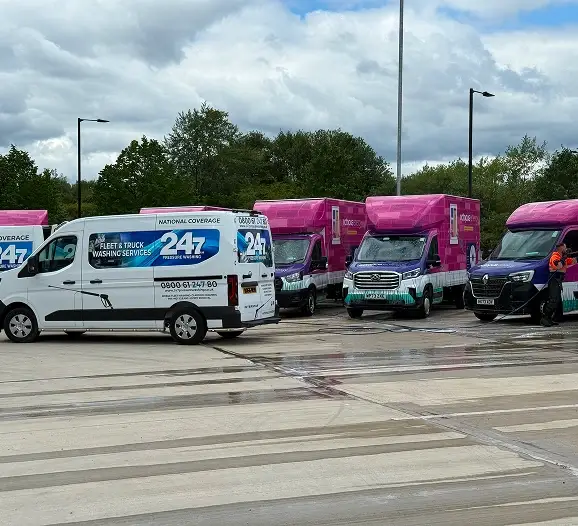
Keeping commercial vehicles clean is about far more than appearance. Regular fleet washing is an essential part of vehicle maintenance, helping businesses protect valuable assets, reduce maintenance costs and present a professional image to customers.
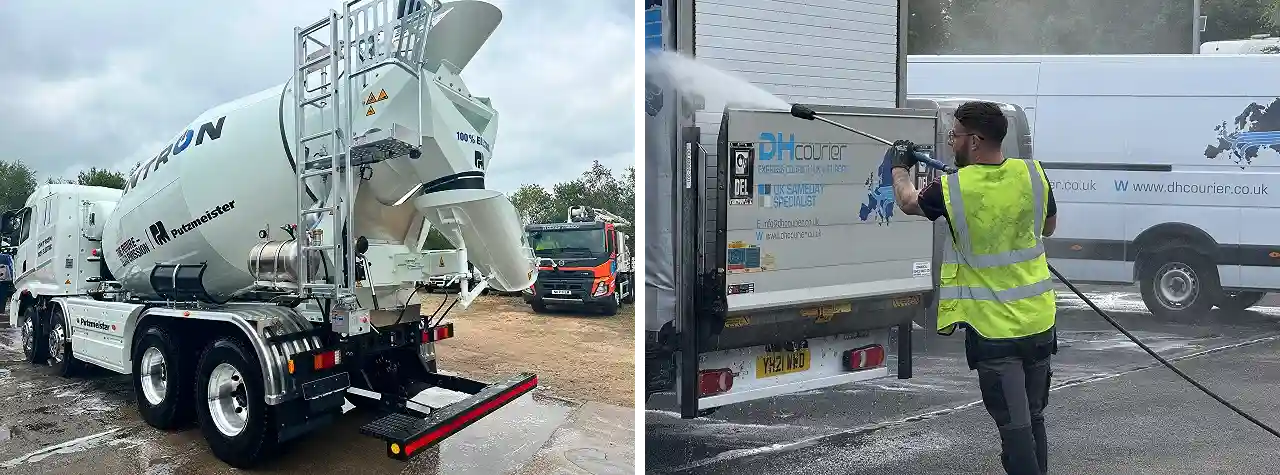
When people think of vehicle washing, they often picture a quick exterior clean to improve appearance. However, an MOT & Service Preparation Wash is a specialist cleaning process designed to prepare commercial vehicles for servicing, maintenance and MOT inspections.
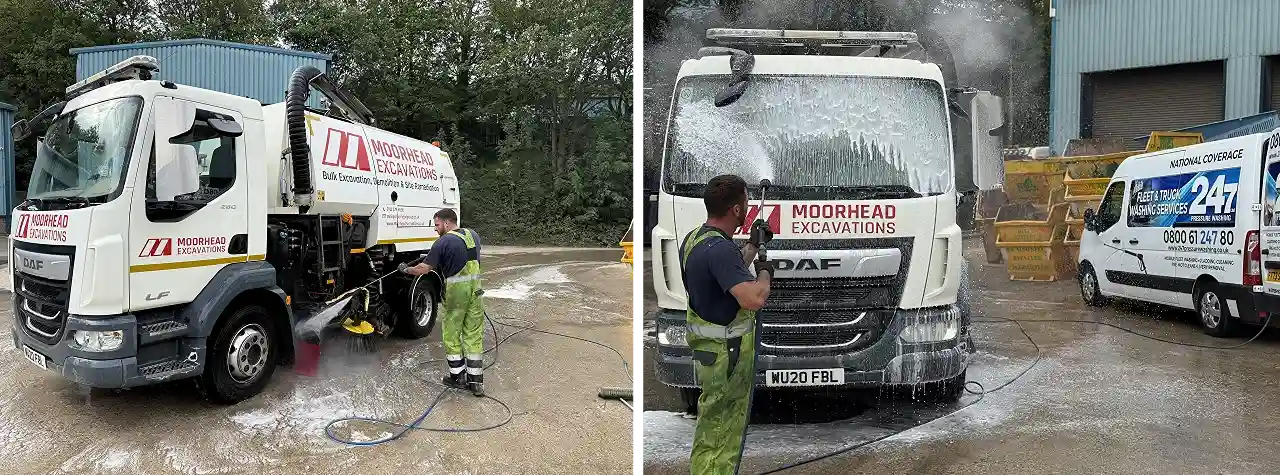
When commercial vehicles are washed, it's not just dirt that's removed. Wash water often contains oil, grease, fuel residues, brake dust, detergents and other contaminants that can pose a risk to the environment if they are allowed to enter surface water drains.



.webp)


Select the service you're interested in and we'll guide you
through a tailored quote process.
Available 24/7
WHAT DO YOU NEED
CLEANED?
Tell us about
your assets
Where are
you located?
Contact
details
Review &
submit

Your quote request has been received.
Our team will review your requirements and get back to you within: